

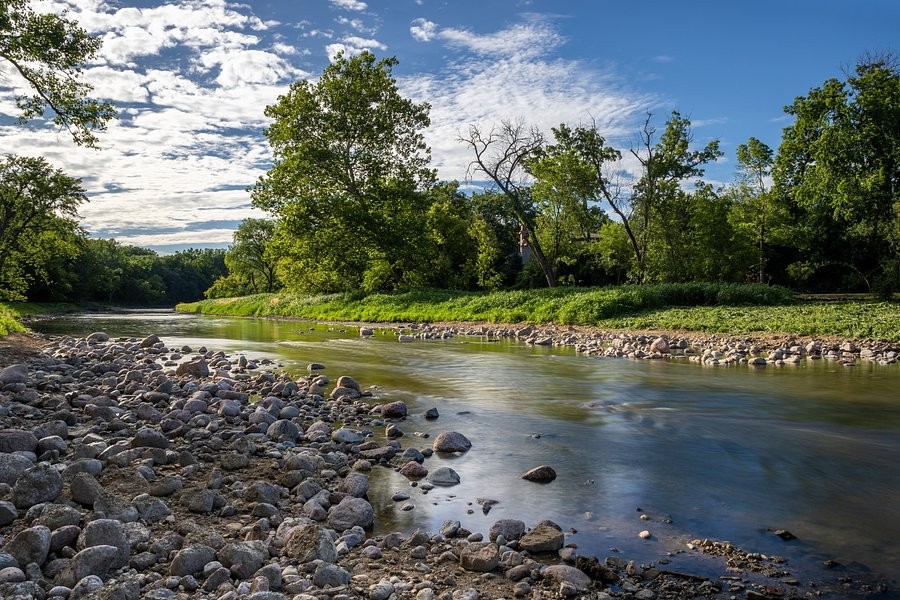
What: Aug. 19 ribbon cutting highlighted major progress on the Salt Creek restoration at Fullersburg Woods, including removal of the Graue Mill dam, restoration of more than a mile of channel, installation of riffles and boulders, stabilization of streambanks, and planting of native vegetation.
Why it’s important: Restoring Salt Creek improves water quality, reconnects wildlife habitat, and creates a healthier stream for people and nature. New monitoring by the Midwest Biodiversity Institute documented eight native fish species now upstream of the former dam site, including smallmouth bass and northern pike, confirming restored fish passage as one example of the project’s success.
Partners/funding: The project is a partnership between the Forest Preserve District of DuPage County, the Metropolitan Water Reclamation District of Greater Chicago, and the DuPage River Salt Creek Workgroup, a nonprofit coalition of local governments, wastewater treatment facilities, environmental groups, and engineers working to improve water quality and
stream health. The project was funded by the DuPage River Salt Creek Workgroup via an innovative financial structure that allowed local wastewater treatment agencies including the Metropolitan Water Reclamation District of Greater Chicago to pay for the Graue Mill dam removal and Salt Creek restoration work.
The dam removal was part of a larger effort to restore more than a mile of Salt Creek. The workgroup’s 2020 restoration plan called for removing the dam, stabilizing the streambank, enhancing aquatic habitat, and planting native vegetation.
Restoration efforts continued in 2025 with the planting of 50,000 native wetland plugs in areas where invasive plants had been removed. Blueflag iris, swamp milkweed, marsh blazing star, and other native flowers will support pollinators and add long-term structure to the wetland ecosystem. Another 15,000 plants and more than 350 trees and shrubs are planned for 2026.
The work to restore Salt Creek isn’t finished, but with improved habitat, cleaner water, and native fish returning, results are already beginning to show.
Quotes:
“The Salt Creek Restoration Project will have long-term benefits for fish passage, water quality, and habitat. These outcomes show what’s possible when science, community, and policy align,” said Daniel Hebreard, president of the Forest Preserve District of DuPage County.
“The removal of this dam is an enormous step in improving the river. The absence of this structure will allow 16 species of fish to move freely upstream and has created and improved 1.3 miles of restored habitat to help them repopulate the Salt Creek Basin,” said Dennis Streicher, chair of the DuPage River Salt Creek Workgroup’s Salt Creek Committee.
“By removing the Graue Mill dam and investing in these water quality improvements, we’ve expanded fish passage, improved habitat, and strengthened Salt Creek’s long-term health. This project reflects what’s possible through collaboration and commitment to clean water,” said Kari K. Steele, president of the Metropolitan Water Reclamation District of Greater Chicago Board of Commissioners.
About the DuPage River Salt Creek Workgroup
The DuPage River Salt Creek Workgroup formed in 2005 to address water quality concerns on the East and West Branches of the DuPage River and Salt Creek. The organization brings together local governments, wastewater agencies, engineers, and environmental organizations to implement targeted watershed projects that improve stream health efficiently and cost-effectively.
About the Forest Preserve District of DuPage County
The Forest Preserve District of DuPage County improves the quality of life for all DuPage County residents. Its 26,000 acres of woodlands, prairies, wetlands, and waterways contribute to cleaner air and water, help with flood control, create vital habitats for wildlife, and provide safe spaces where people can boost their physical and mental health. More than 5.9 million people visit its 60 forest preserves, 175 miles of trails, seven education centers, and scores of programs each year. For information, call 630-933-7200 or visit dupageforest.org, where you can also link to the District’s e-newsletter and Facebook, X, Instagram, YouTube, and TikTok pages.
About the Metropolitan Water Reclamation District of Greater Chicago
Established in 1889, the Metropolitan Water Reclamation District of Greater Chicago is an awardwinning, specialpurpose government agency responsible for treating wastewater and managing stormwater across Cook County, Illinois, including Chicago and 128 surrounding communities. It protects Lake Michigan (the region’s source of drinking water), improves water quality, reduces flooding, and safeguards public health.